
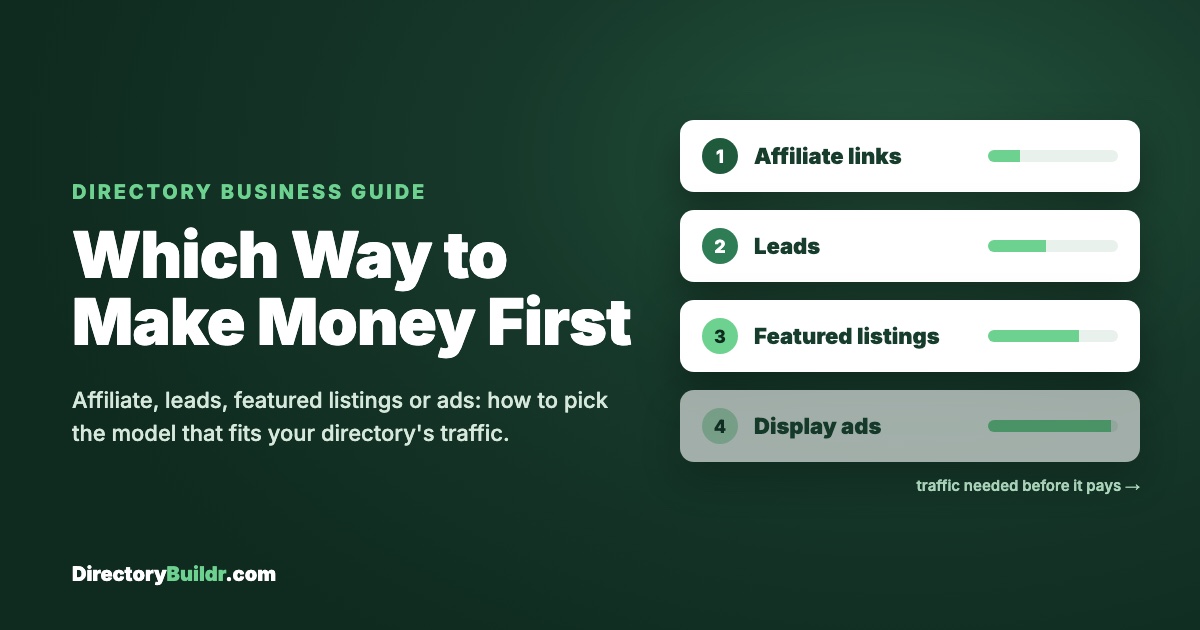
How to Make Money From a Directory: Which Model to Start With
There are at least seven ways a directory can make money. This overview covers all of them.
The harder question is which one to start with. Every model needs a different amount of traffic before it pays anything, and picking one that doesn't fit your stage is how directories stall.
So this guide doesn't add to the list. It gives you an order.
Every model has a traffic threshold
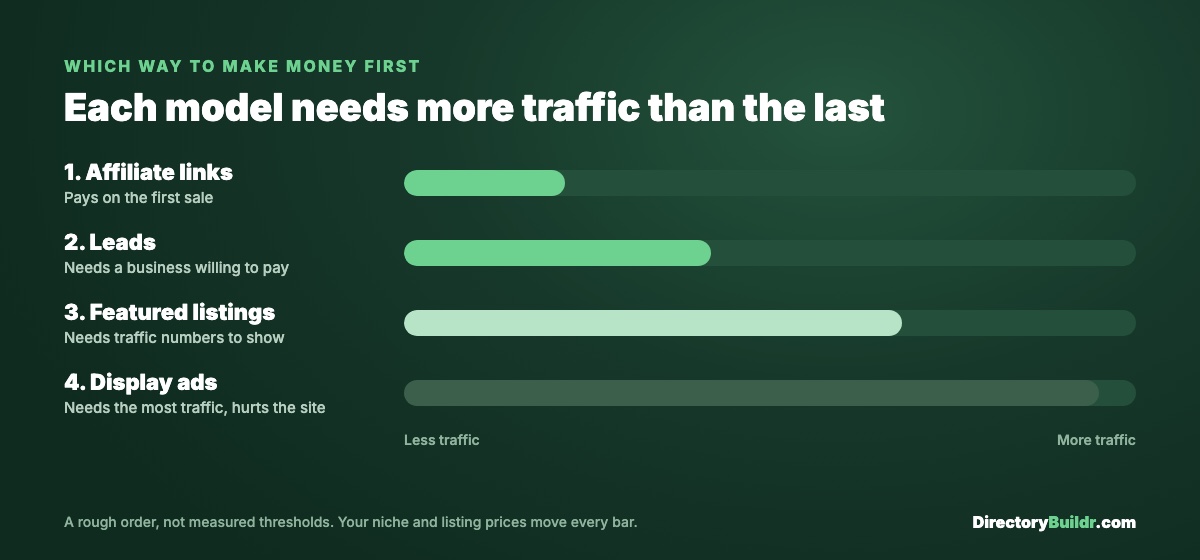
The way to think about it: each model needs a certain amount of traffic, or a certain kind of visitor, before it earns anything.
Affiliate links pay on the first sale. You don't need anyone's permission or a sales conversation. You need a few hundred visitors who are about to buy.
Leads need visitors who want a service, plus a business willing to pay for the enquiry. One good lead can be worth more than a month of affiliate clicks, but you have to find the buyer.
Featured and paid listings need enough traffic that a business can see it. Nobody pays $50 a month to be featured on a page that gets 30 visits.
Display ads need the most traffic of all, and they make the site worse to use. They're last on this list for a reason.
That gives you a rough sequence: affiliate first if you list products or software, leads first if you list local services, featured listings once there's traffic to show, ads last or never.
Start with affiliate if you list products or tools
Affiliate works early because it doesn't depend on anyone but the visitor.
It's how this site earns from its listings. The listings for tools like Lovable and Bright Data carry affiliate links, so a reader who signs up through the listing earns a commission, and each one says so right under the button. No outreach, no invoices.
Here's the shape of the math. These are made-up round numbers, not real results, to show how the pieces multiply:
| Step | Example |
|---|---|
| Visitors to a "best X" category page | 1,000 a month |
| Click through to a product | 10% = 100 clicks |
| Buy | 2% = 2 sales |
| Commission per sale | $100 |
| Monthly earnings | $200 |
Two things change that number more than traffic does. The price of the product, because a 10% commission on a $5,000 cold plunge tub is very different from 10% on a $20 accessory. And intent: a page targeting "best cold plunge tub" sends buyers, while a page about "cold plunge benefits" sends readers.
Two rules for affiliate directories. Disclose the links clearly, because the FTC requires it in the US and readers trust you more for it. And don't let commissions decide your rankings. The first time a reader sees an obviously worse product above a better one, the whole list stops being believable.
How to build an affiliate directory goes deeper on this model.
Start with leads if you list local services
If your listings are plumbers, dentists, apartment locators or anything a customer hires, leads usually beat affiliate. There's often no affiliate program for a local plumber anyway.
A lead is a visitor who asks for a quote or a booking through your site, which you pass to a business. You can charge per lead, or a flat monthly fee for being the business that receives them.
The best early clue to what a lead is worth is the cost per click in a keyword tool. In the niche research guide, "coworking space near me" had a CPC of $5.48. That's what a business pays Google for one click, from a visitor who may or may not get in touch. A visitor who actually fills in your form is worth more than that click, so the CPC gives you a floor for pricing.
The catch is that leads need a buyer. Before you build the form, talk to three businesses in the niche and ask if they'd pay for enquiries, and how much. If none of them will, you've learned that cheaply.
The apartment locator example walks through a lead-based local directory in detail.
Add featured listings once you have traffic to show
Featured listings and paid placements are the classic directory model, and they work. But they work later than most people expect.
A business buys a featured spot when it believes it will get customers from it. The way to make it believe that is numbers: "your listing was viewed 340 times last month, and 22 people clicked through to your website." If your platform tracks views and clicks per listing, those reports are your sales pitch.
Until you have those numbers, you're selling a promise. Some businesses will buy it, especially if you price low and offer a free first month. Most won't.
Once you do have them, the order to try is:
- Featured spots at the top of category or city pages. Easiest to sell, easiest to understand.
- Paid listings for businesses that want a fuller profile, more photos or a contact form.
- Sponsorships of a whole category or city, for one business that serves the whole area.
Leave display ads for last
Display ads pay per thousand views, and on a niche directory the numbers are small. They also push your listings down the page and slow it down, which hurts the experience your other models depend on.
If you add them at all, add them after the other models are working, and keep them off your highest-value pages.
What about charging for submissions?
Plenty of directories, especially software tool directories, charge businesses to be listed or to skip the review queue.
It can work, but be honest with yourself about what's being bought. If your directory has little traffic, the buyer is paying for a backlink, not for customers. That's a fragile business: it depends on backlinks staying valuable, and it fills your directory with listings that paid rather than listings that are good.
A free basic listing plus paid upgrades is usually a better long-term model. The free listings keep the directory complete, and the upgrades pay for it.
The short version
| Your directory lists | Start with | Add next |
|---|---|---|
| Products or software | Affiliate links | Featured spots, sponsorships |
| Local services | Leads | Featured listings, paid profiles |
| Both | Whichever matches your highest-traffic pages | The other one |
Pick one model and make it work before adding a second. Two half-built revenue streams earn less than one working one.
If you're still choosing what to list, start with validating a niche with search data, then your first 50 listings. And if you want a directory built around leads from the start, this is how we approach it, or get in touch.